Public funding · LIAA
LIAA
SIA “Codnity Dev”, as a member of the Latvian IT Cluster and a participant in its cooperation network, has entered into an agreement to take part in the activities of Project No. 5.1.1.2.i.0/3/24/A/CFLA/010 “Cluster Support for the Internationalization and Development Promotion of the ICT Sector.” The objective of the project is to increase private research and development expenditures through targeted public investments that promote the development of new products and technologies, as well as the transfer of knowledge into the economy. The project is co-financed by the European Union Recovery Fund.

Recent insights
What we’ve been writing about
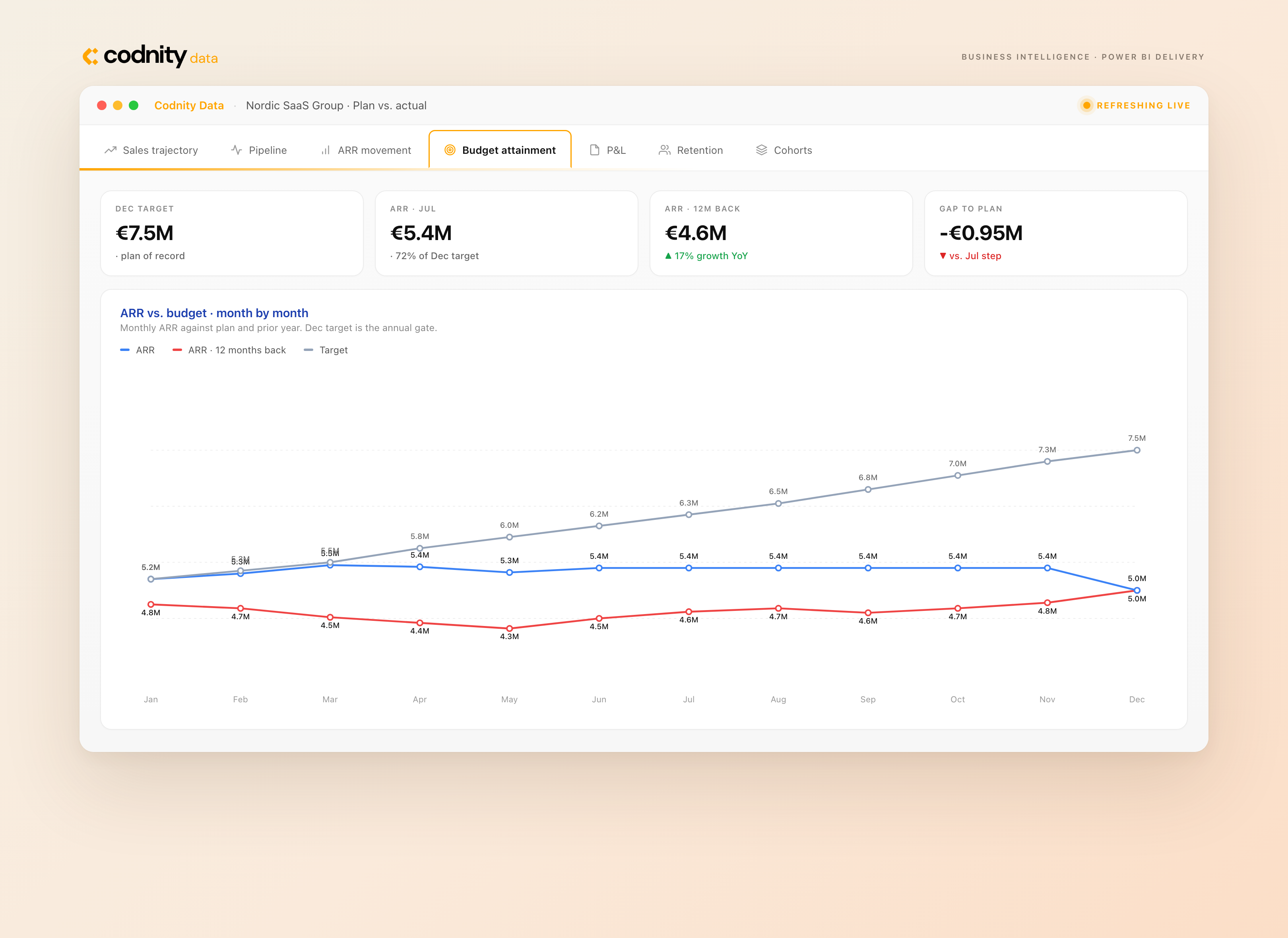
Power BI for a Nordic Loyalty-Tech SaaS
A Power BI reporting stack for a Nordic B2B SaaS company whose platform runs digital loyalty programs for convenience and fuel retail chains across Europe and the US. Two connected reports share one calendar and one currency logic: the first makes recurring revenue trustworthy on any given day, not just at month-end; the second turns hand-tracked KPIs into a live board across six departments, actual against target. Not prettier dashboards - one version of the numbers the whole business can trust.

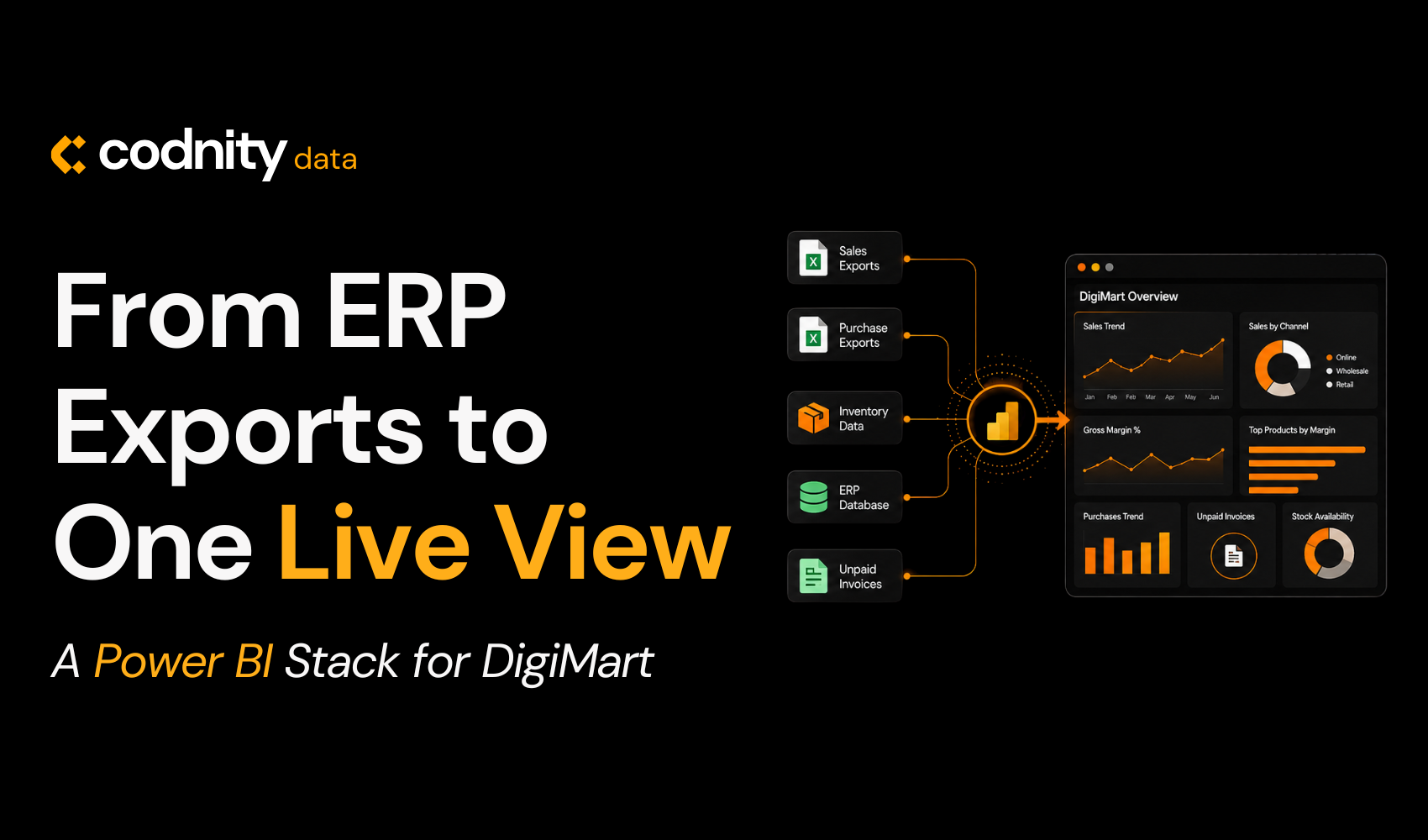
A Power BI Stack for DigiMart
A Power BI semantic model built by Codnity Data for CCLM SIA - the company behind DigiMart, a Baltic e-commerce and wholesale operator selling Samsung, Bosch, Philips, Xiaomi, Heinner and other appliance brands across Latvia, Lithuania and the Nordics. The model pulls live data from their Moneo accounting system via API, replaces a stack of spreadsheet exports, and gives the team one place to look at sales, gross profit, purchases, unpaid invoices and stock availability - including a custom "Provision of Goods" engine that tracks how many days each SKU sat with no stock.
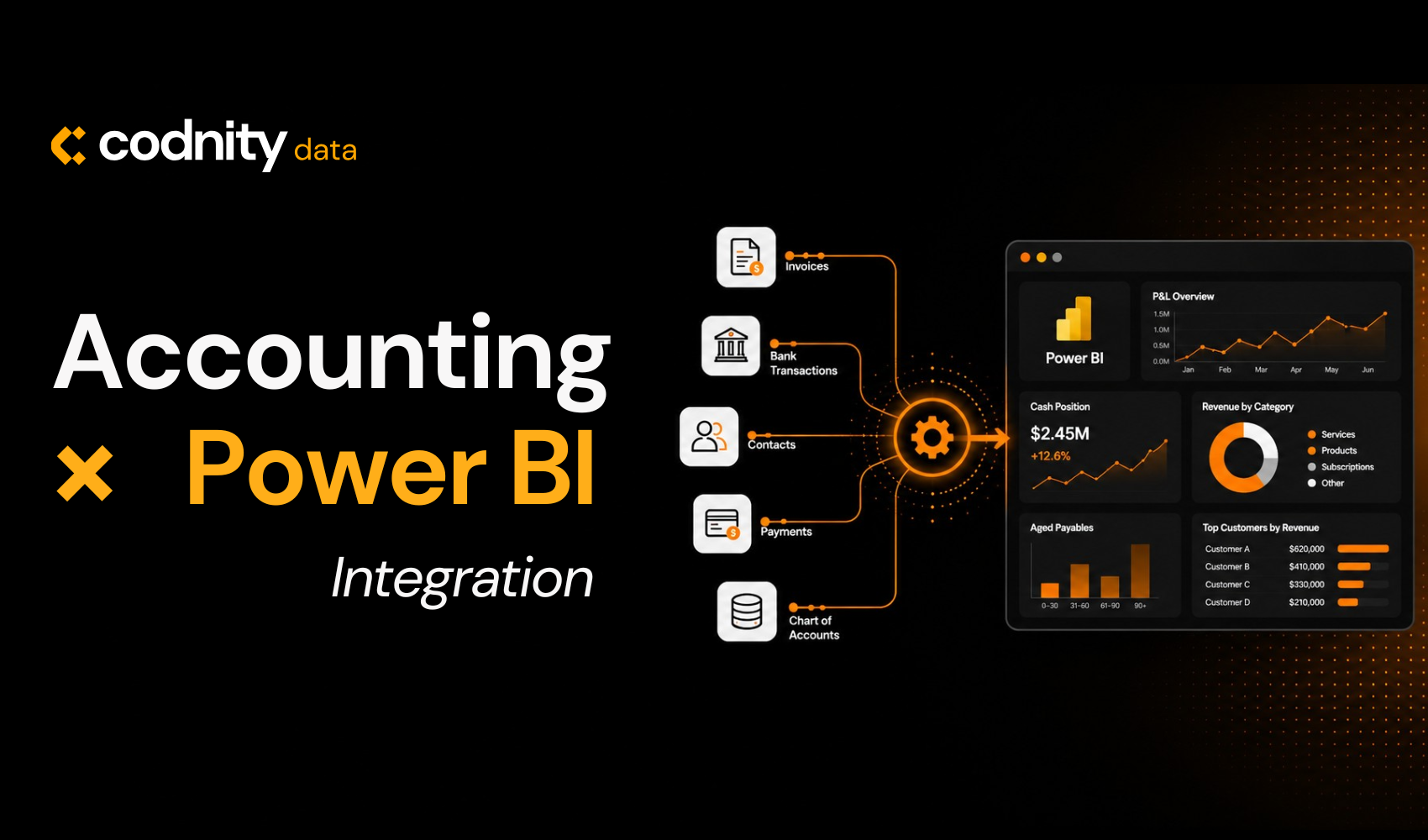
Accounting Data × Power BI Integration
Connecting your accounting system (Xero, QuickBooks, Moneo) to Power BI replaces manual monthly reporting with automated, continuously refreshed dashboards. Finance teams gain a live P&L, real-time cash position, and drill-through access to underlying transactions - without manual exports. The critical component is the semantic model, which maps the chart of accounts to how leadership reads the business.
Start with proof
Have a project that needs serious execution?
Let’s talk.
We walk through relevant case studies in detail. Architecture, timelines, what went wrong and how we fixed it, and the metrics that followed. No pitch decks, no promises without proof.
- Discovery call, no pitch deck
- Relevant case studies shared in full
- Transparent scoping before commitment
- Response within 24 hours